


What is Methylene Blue Capsules?
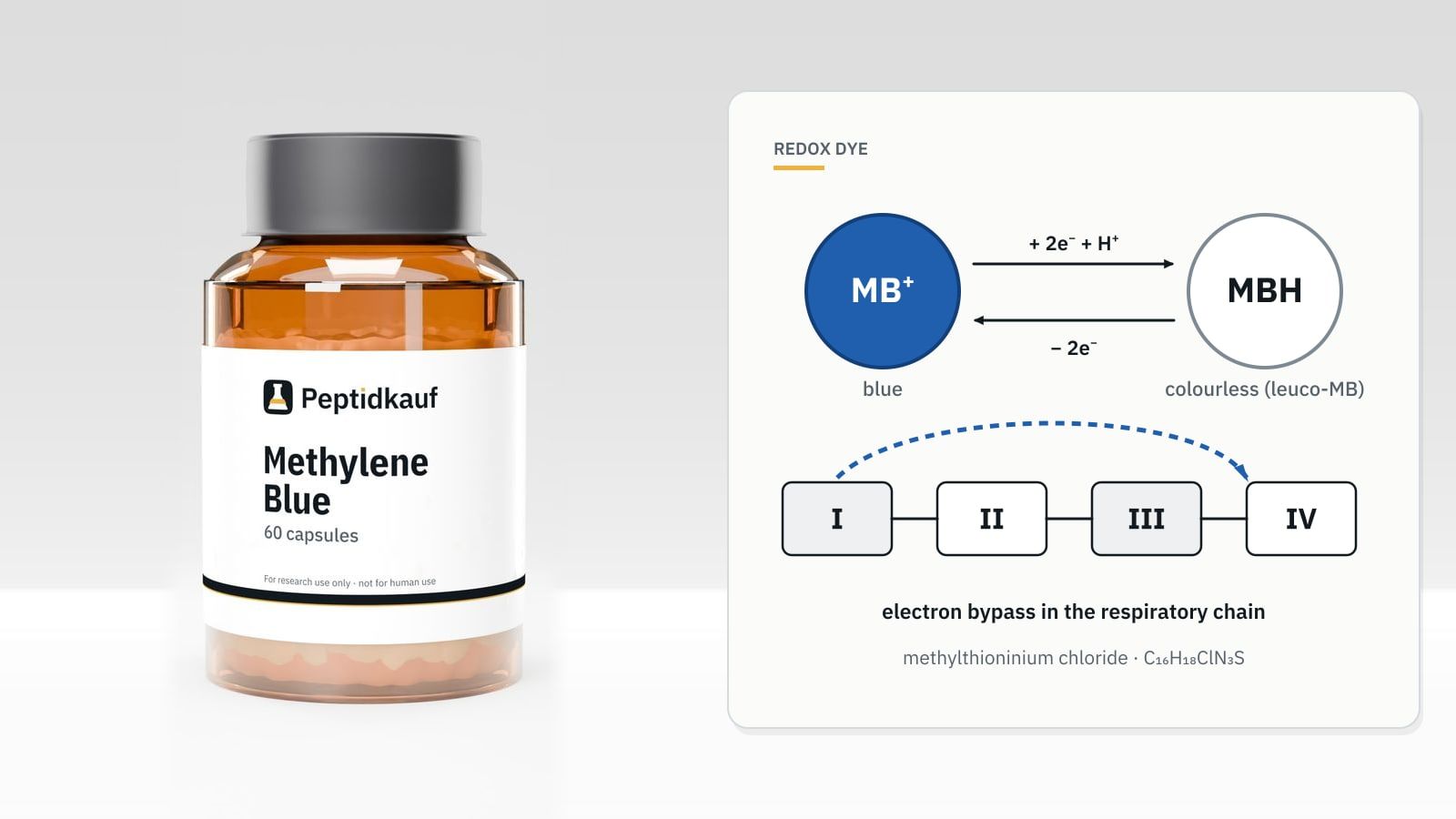
Methylene blue (methylthioninium chloride, C₁₆H₁₈ClN₃S) switches between the oxidised blue form and reduced, colourless leucomethylene blue. This redox behaviour makes it a classic laboratory dye and electron carrier. In capsule form the substance comes in a constant amount per capsule, which makes standardised test series without reconstitution easier.
More data in the lexicon entry on Methylenblau.
State of research
Methylene blue was synthesised as a textile dye in 1876; in 1891 Paul Ehrlich used it as the first synthetic antimalarial. Today it is approved as a medicine for methaemoglobinaemia and is a standard stain in microscopy.
Mitochondrial research is interested in its redox property: at low concentrations methylene blue can carry electrons past blocked sites in the respiratory chain. Studies examine oxygen consumption, neuronal energy supply and models of Alzheimer's and Parkinson's; one variant was tested clinically against tau deposits without meeting its primary endpoint. Methylene blue also inhibits monoamine oxidase A, which matters in experiments with serotonergic substances.
Status and quality
Methylene blue is approved as a medicine for certain indications. The material offered here is not a medicinal product. Peptidkauf sells Methylene Blue Capsules solely as a research reagent for laboratory and in-vitro use and gives no dosing or application advice.
An independent laboratory tests every batch for identity and content before it goes on sale; the reports and their verification keys are in the lab report archive. Store the capsules dry, protected from light and at room temperature; no reconstitution is needed.
Related products and articles
More mitochondrial research: NAD+ capsules, SS-31, MOTS-c.
Background in the magazine: Methylene blue: effects, history and research