


What is TRH (Protirelin)?
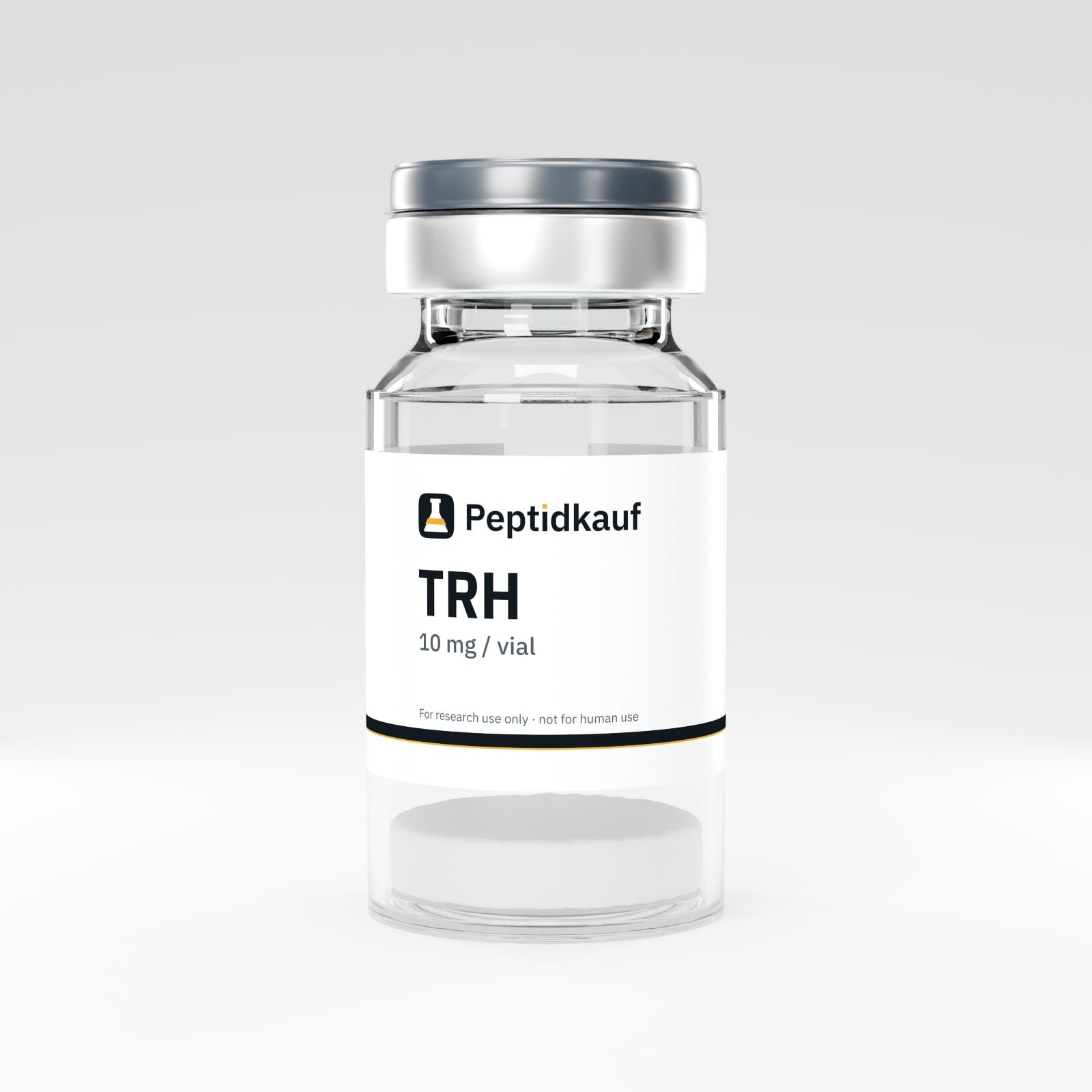
TRH consists of pyroglutamic acid, histidine and prolinamide (pGlu-His-Pro-NH₂). It stimulates the release of TSH and prolactin from the pituitary.
More data in the lexicon entry on TRH.
State of research
With only three building blocks, pyroglutamic acid, histidine and prolinamide, TRH is one of the smallest peptide hormones. Its structure was solved in 1969. Clinically, the TRH test was long used to diagnose thyroid disorders.
Beyond the thyroid axis, TRH is studied as a neuromodulator: it occurs in many brain regions and in animal models affects wakefulness, mood and seizure threshold. Because it is degraded in minutes in blood, researchers develop more stable TRH analogues, for instance for neurological questions.
Status and quality
Protirelin is approved as a diagnostic. The material offered here is not a medicinal product. Peptidkauf sells TRH (Protirelin) solely as a research reagent for laboratory and in-vitro use and gives no dosing or application advice.
An independent laboratory tests every batch for purity (HPLC), identity and measured content before it goes on sale; the reports and their verification keys are in the lab report archive. The material ships as lyophilised powder in a glass vial; storage and laboratory handling are covered under storage & handling.
Related products and articles
More releasing hormones: gonadorelin (GnRH) and sermorelin (GHRH). Thyroid hormone research: sobetirome.