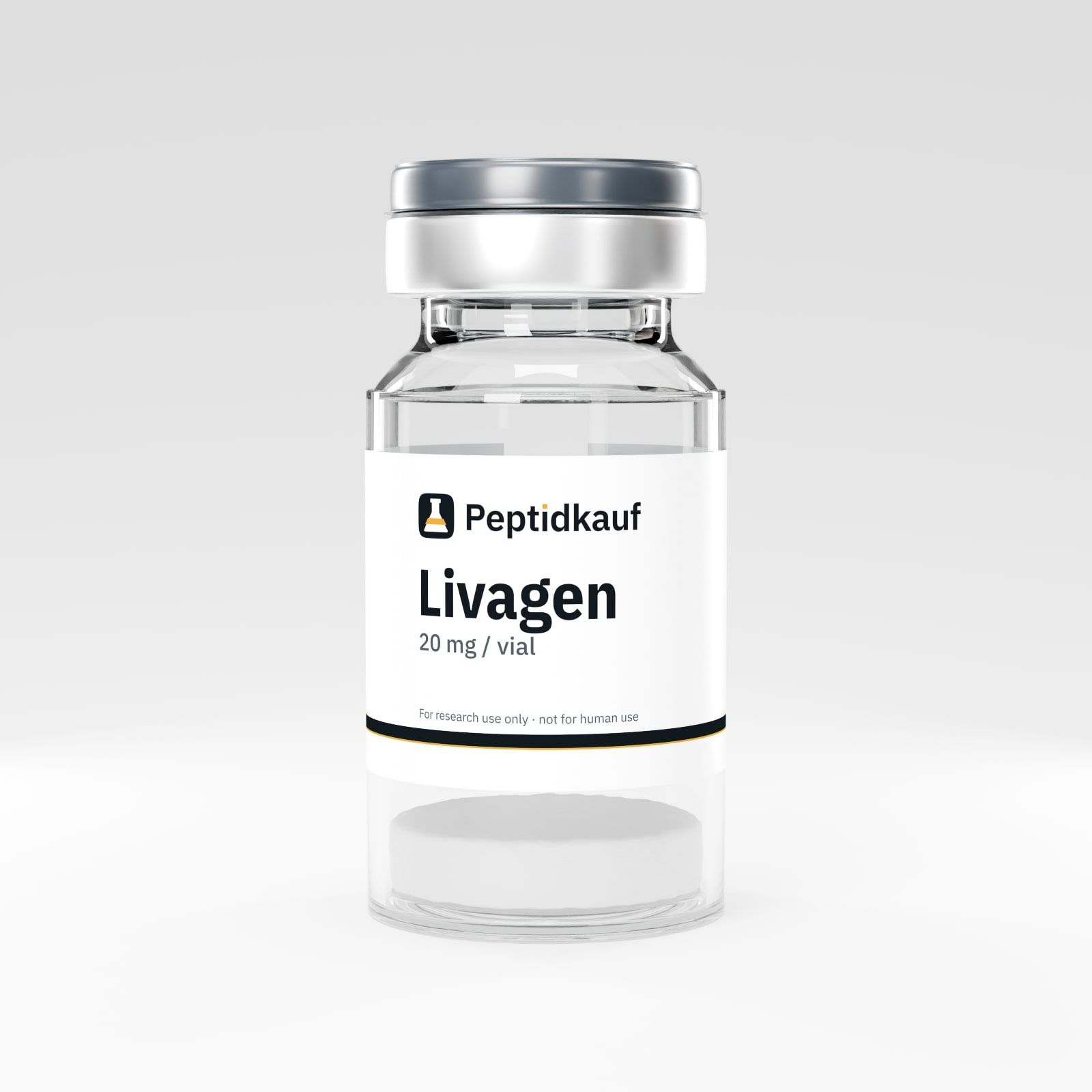



What is Livagen?
Livagen consists of lysine, glutamic acid, aspartic acid and alanine. It was described as a short signalling peptide in the Russian bioregulator research around V. Khavinson.
More data in the lexicon entry on Livagen.
State of research
Livagen (Lys-Glu-Asp-Ala) is one of the early tetrapeptides in this field. Studies examined chromatin decondensation in lymphocytes from older people, activation of previously silent genes and enzyme activities in rat liver and gut models.
The literature on the short bioregulator peptides comes mostly from Vladimir Khavinson's group at the St Petersburg Institute of Bioregulation and Gerontology. The proposed shared mechanism is that di- to tetrapeptides enter the nucleus and interact with DNA and histones, changing how certain genes are read. Independent replications outside this group are rare, and controlled human studies are largely lacking.
Status and quality
Livagen is not approved as a medicine. Peptidkauf sells Livagen solely as a research reagent for laboratory and in-vitro use and gives no dosing or application advice.
An independent laboratory tests every batch for purity (HPLC), identity and measured content before it goes on sale; the reports and their verification keys are in the lab report archive. The material ships as lyophilised powder in a glass vial; storage and laboratory handling are covered under storage & handling.
Related products and articles
More bioregulators: Pancragen, Bronchogen, Cartalax, Prostamax. All in the longevity research area.