Oral BPC-157: capsules or vial in research?
Peptidkauf Redaktion4 min read
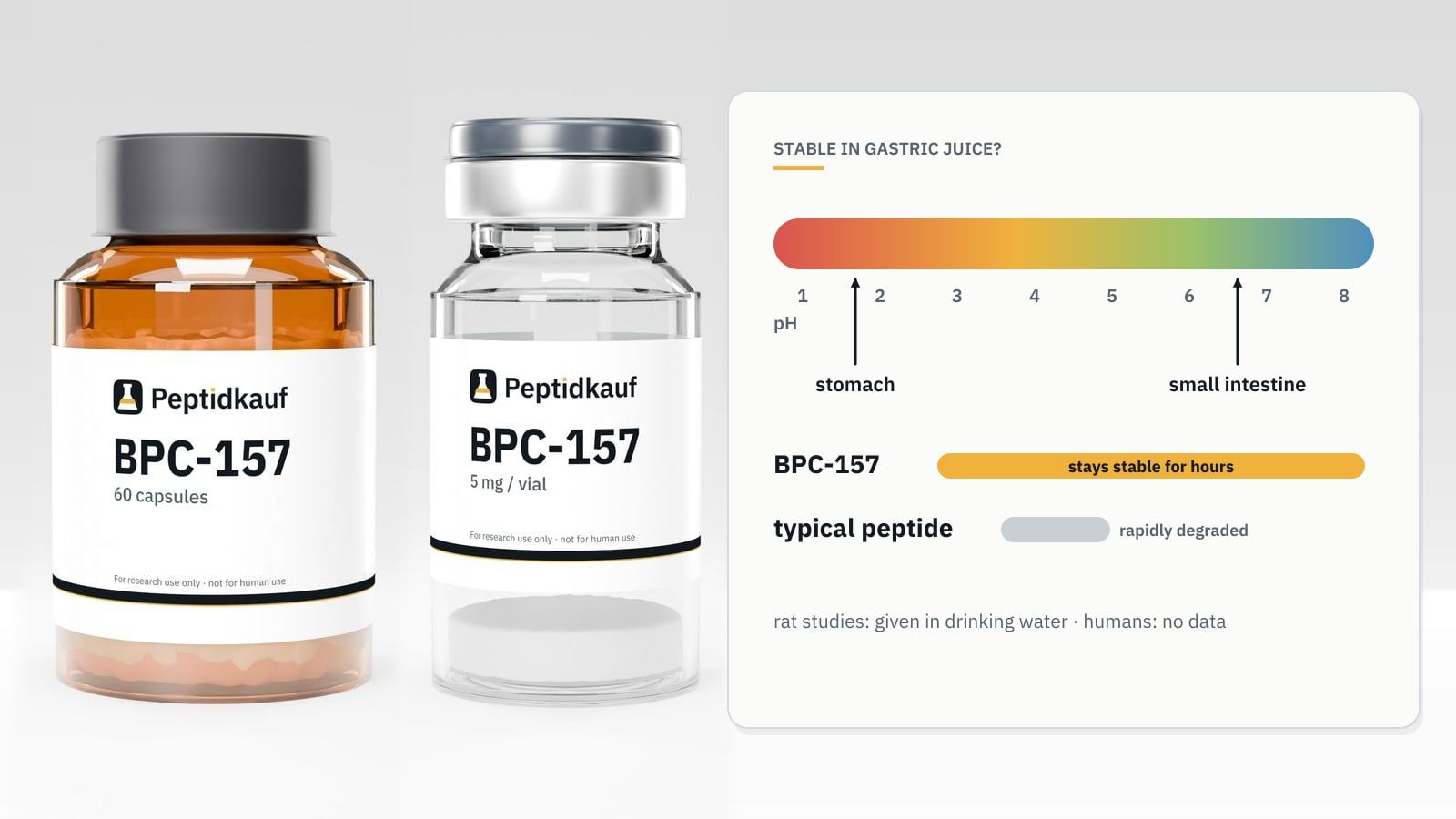
Most peptides do not survive the stomach. Acid and digestive enzymes break them into single amino acids within minutes. BPC-157 is considered an exception, which is why it is sold not only as lyophilised powder but also as capsules. How much is there to the stability claim, what do animal studies with oral administration show, and when does which form suit laboratory work? This article sorts out the questions around "oral BPC-157". It describes research and contains no usage or dosing advice.
At a glance
- BPC-157 comes from a gastric juice protein and is considered unusually stable in acid.
- Many rat studies gave BPC-157 in drinking water or by gavage, mainly in models of the stomach and gut.
- How much intact peptide reaches the blood after oral intake has hardly been studied. Human data are lacking.
- For cell culture, lyophilised powder is the better choice; capsules suit experiments on release and stability.
Why peptides usually do not survive the stomach
A peptide is a chain of amino acids joined by peptide bonds. In the stomach the enzyme pepsin cleaves these bonds at very acidic pH; in the small intestine trypsin, chymotrypsin and other peptidases follow. What remains are single amino acids and short fragments. That is why almost all peptide medicines are injected; one of the few exceptions is semaglutide as a tablet, which only works with a special absorption enhancer (more in GLP-1 agonists explained).
What makes BPC-157 different
BPC-157 is a 15-amino-acid section of a protein found in gastric juice. Predrag Sikirić's group in Zagreb reported early on that the peptide stays stable in human gastric juice for many hours. One reason is probably its sequence: several prolines (GEPPPGKPADDAGLV) make the chain rigid and hard for many peptidases to attack.
| Property | BPC-157 | Typical peptide |
|---|---|---|
| Stability in gastric juice | Described over hours | Minutes |
| Oral dosing in animal studies | Common (drinking water, gavage) | Rare |
| Pharmacokinetics after oral intake | Hardly studied | – |
| Human data | No controlled studies | – |
What do animal studies with oral dosing show?
A large part of the BPC-157 literature uses oral administration, often alongside injection. The main subjects were:
- Gastric and intestinal lining: damage from alcohol, anti-inflammatory drugs or acid in rat models.
- Gut inflammation and fistulas: models of colitis and connections between bowel segments.
- Tendons and muscle: some models also described effects outside the gut with oral dosing.
In many of these papers the authors reported similar effects for oral administration and injection. That is remarkable but should be read with care: the studies come mostly from one group, and independent replications are rare. The overall evidence is described in BPC-157 in research.
What is missing
A pharmacokinetic study in rats and dogs found a very short half-life after injection; the peptide was rapidly broken down into amino acids. How much intact BPC-157 actually reaches the blood after oral intake, by contrast, has hardly been measured. Oral effects may also arise locally in the gut. There are no controlled human studies, either of the oral form or any other.
Capsules or lyophilised powder?
Both forms have their place in laboratory practice:
| Criterion | Capsules | Lyophilised powder |
|---|---|---|
| Reconstitution needed | No | Yes |
| Storage | Room temperature, dry | Cool to frozen |
| Cell culture | Unsuitable (fillers) | Suitable |
| Release and digestion experiments | Suitable | Only with your own formulation |
| Free choice of concentration | No, fixed amount per capsule | Yes |
Besides the active substance, capsules usually contain fillers and a capsule shell. For in-vitro work, where any additive interferes, pure powder is the better choice. For experiments that study release and stability in a simulated digestive tract, capsules with a fixed amount are practical.
Acetate or arginate?
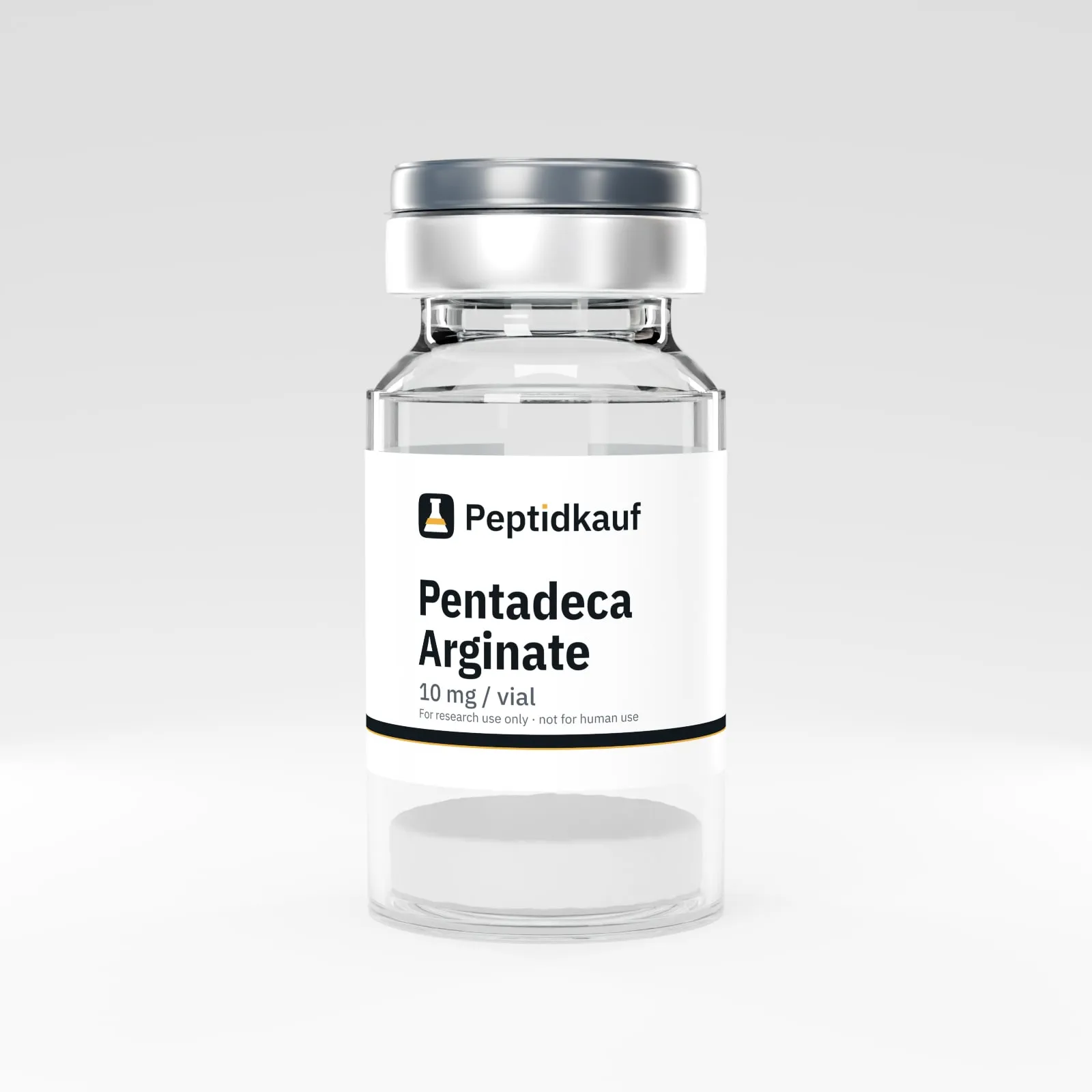
Besides the usual acetate salt, BPC-157 is available as an arginate salt, sold as pentadeca arginate. The sequence is identical; only the counter-ion differs. Manufacturers describe higher stability in solution; independent comparison data, including on oral stability, are scarce.
BPC-157 at Peptidkauf
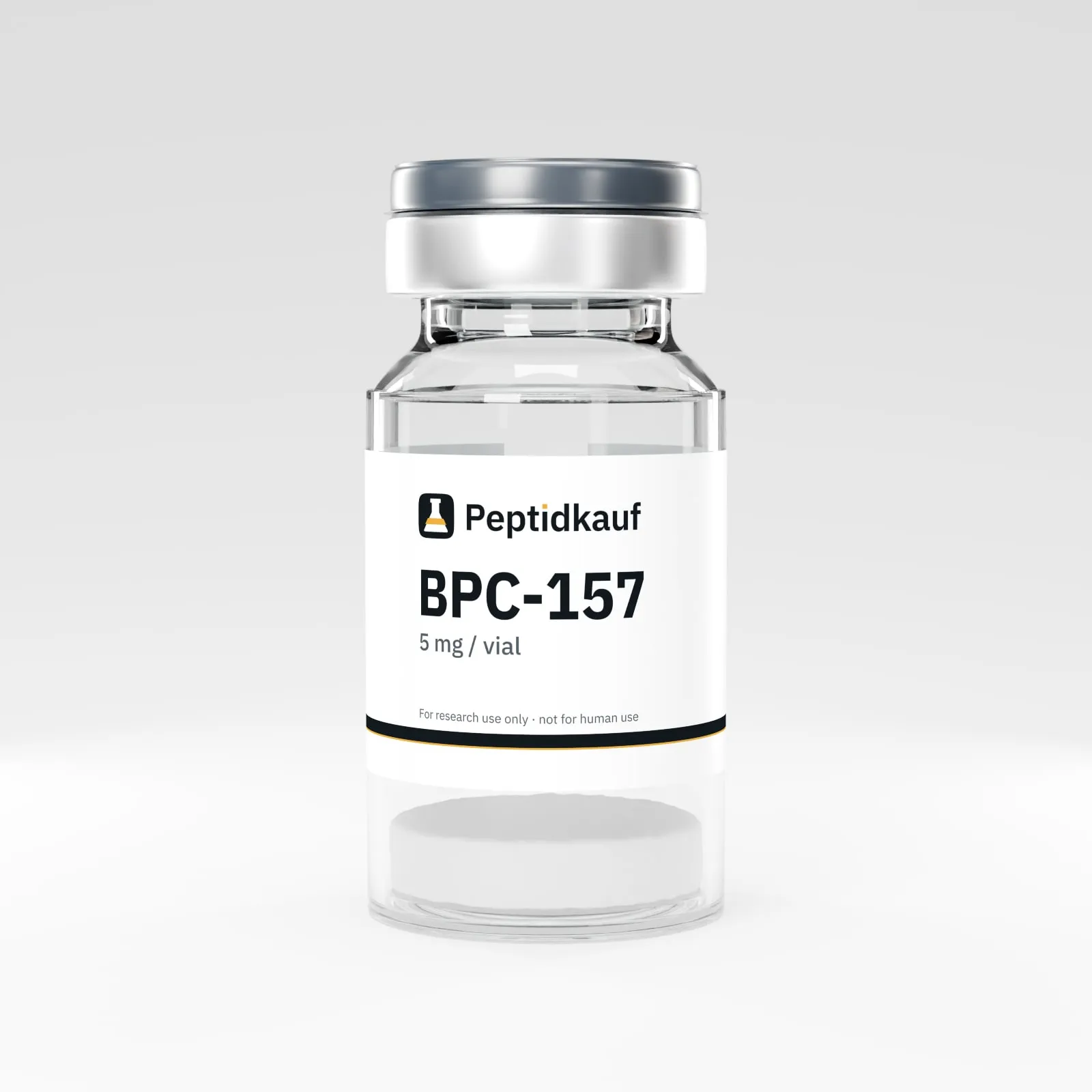
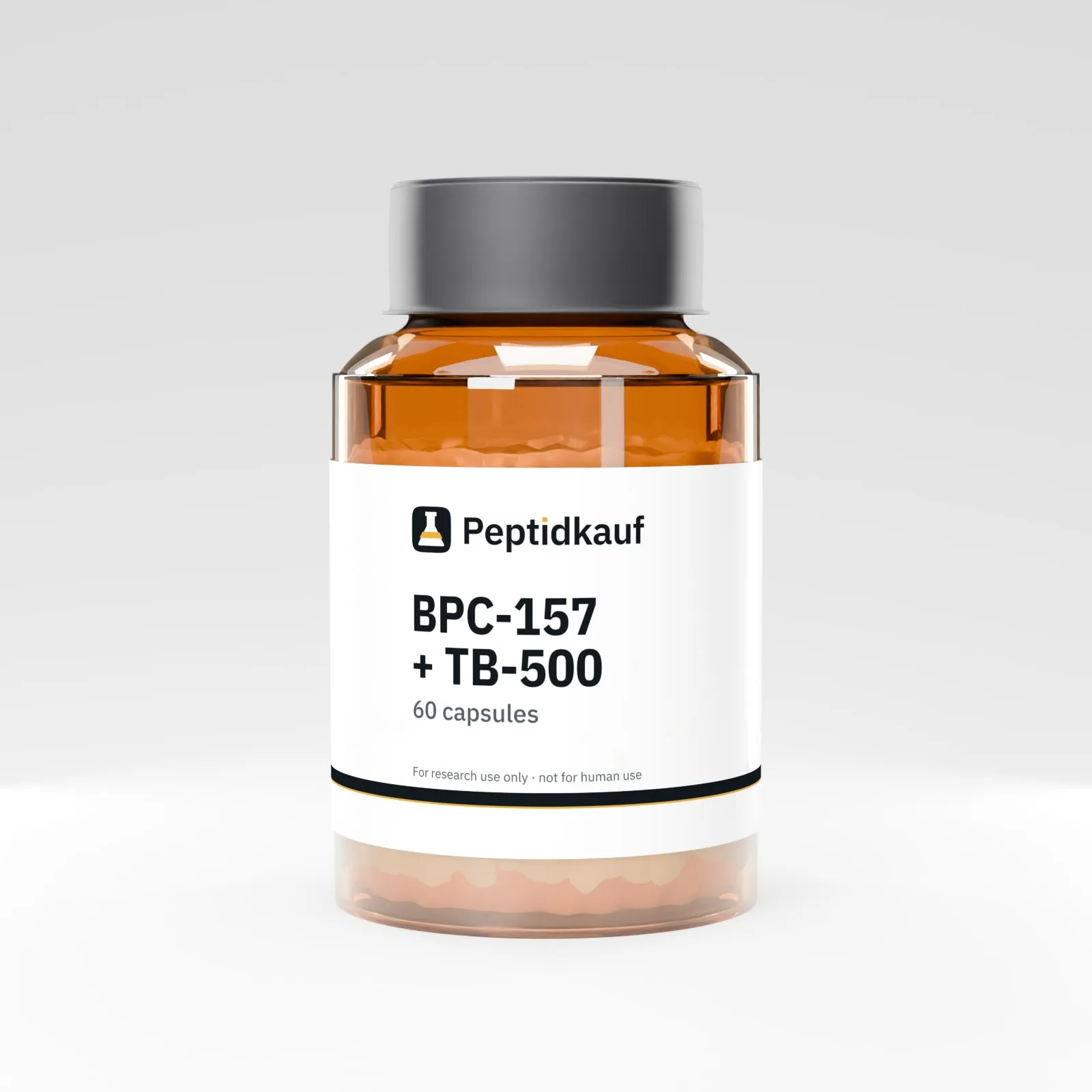
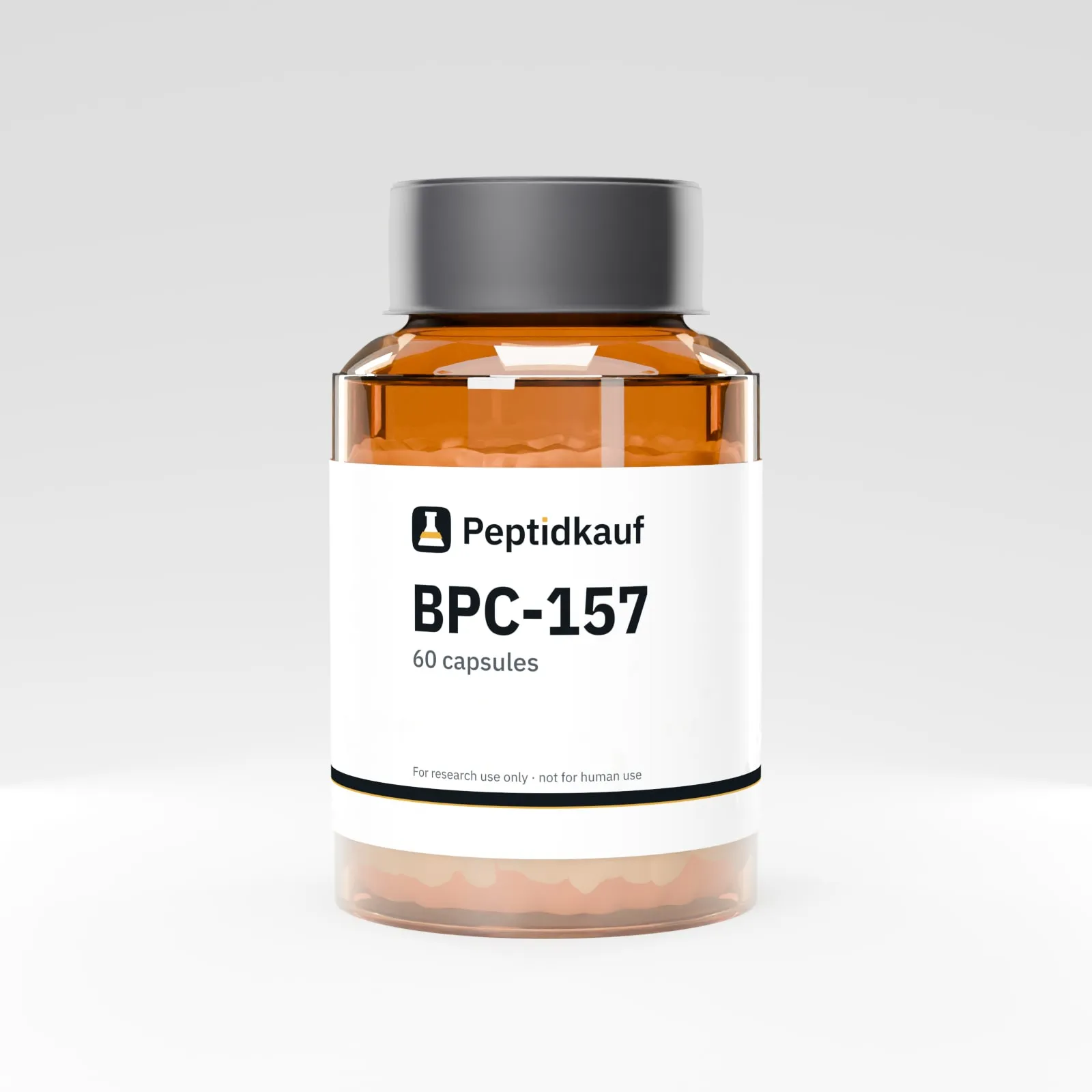
Peptidkauf offers BPC-157 capsules, BPC-157 as lyophilised powder and the combination BPC-157 + TB-500 capsules, each as a research reagent with a lab report for every batch. On the legal position see are peptides legal?.
Frequently asked questions
Is BPC-157 active orally?
Rat studies described effects with oral dosing, mainly in the gastrointestinal tract. There are no human data.
Why is BPC-157 stable in the stomach?
It comes from a gastric juice protein, and its proline-rich sequence is hard for many digestive enzymes to cleave.
What is the difference between BPC-157 capsules and the injectable form?
Capsules contain a fixed amount with fillers and need no reconstitution. Lyophilised powder is pure and is dissolved in the lab.
Is BPC-157 approved as a capsule?
No. BPC-157 is not approved as a medicine in any form and is on the WADA Prohibited List.
Conclusion
BPC-157 is one of the few peptides for which an oral form is scientifically discussed at all: it is considered stable in gastric juice, and many animal studies gave it in drinking water. How much of it reaches the body intact, however, is open, and human data are lacking. For research: capsules for questions about release and digestion, pure powder for cell experiments.