Batches & traceability: from vial to certificate
Peptidkauf Redaktion2 min read
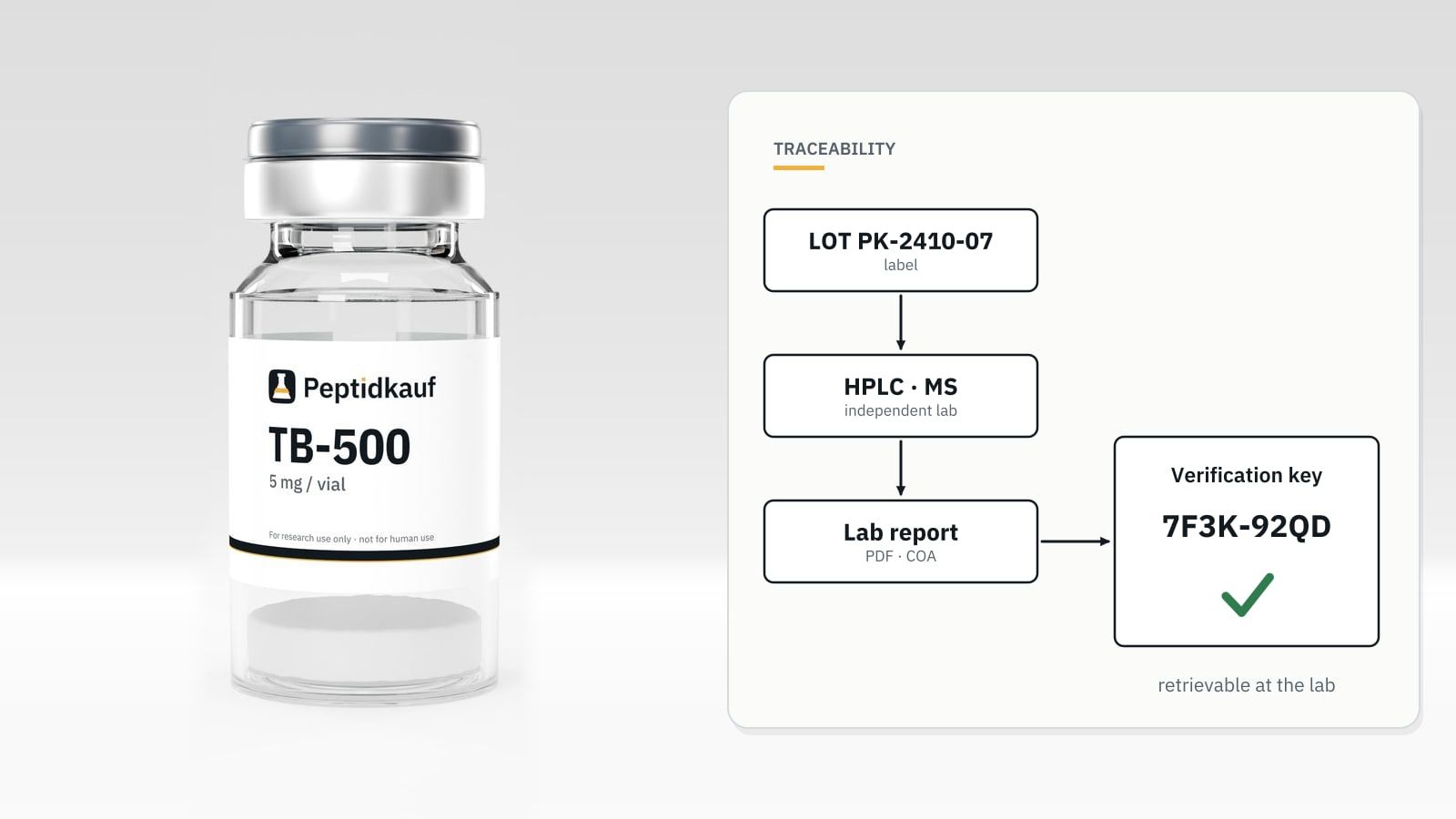
A certificate of analysis is only as valuable as its link to the material. The batch number connects the vial in your lab with the test described in the certificate. This article explains how that chain is built and how to continue it in your own documentation.
What is a batch?
A batch (or lot) is a quantity of material produced in one continuous manufacturing run under the same conditions. All vials of a batch should therefore have the same quality. When a lab tests a sample of the batch, the result stands for the whole batch.
The traceability chain
- Manufacture: synthesis, purification and freeze-drying produce a batch with a batch number.
- Sampling: a vial from the batch is sent to an independent laboratory.
- Testing: the lab assigns its own task number, measures purity, identity and where applicable content, and issues a certificate.
- Publication: the certificate is linked to the batch number and product variant.
- Delivery: your vial carries the batch number so you can find the matching certificate.
- Lab notebook: you record batch, receipt, storage and use.
What a certificate contains
Certificates in the Peptidkauf range come from Janoshik Analytical. They include:
| Field | Meaning |
|---|---|
| Task | The lab's unique test number |
| Sample | Sample name as submitted |
| Batch | Manufacturer's batch number |
| Ordered / Received / Analyzed | Order, receipt and analysis dates |
| Results | Measured values, e.g. content in mg and purity in % |
| Verification key | Key to verify the certificate on the lab's website |
The verification key lets you check a certificate's authenticity directly with the lab, ruling out later alteration.
Finding the right certificate
Each product page lists batches per size with analysis date, purity and a link to the certificate. The lab report archive lists every certificate in the range and is searchable by product. Match the batch number on your vial against the table.
Traceability in your own lab
Good laboratory practice continues the chain. Useful entries:
- Product, size, batch number and certificate number
- Date of receipt and condition of the delivery
- Storage location and temperature
- Every reconstitution with date, solvent, volume and concentration
- Aliquots with unambiguous labels
If a result later looks unusual, you can check whether all affected experiments used the same batch or stock solution. Storage guidance: Storage & handling.
Conclusion
The batch number links vial, certificate and experiment. Documenting it consistently means every result can be traced to a tested batch and deviations can be investigated precisely.