Peptide lexicon
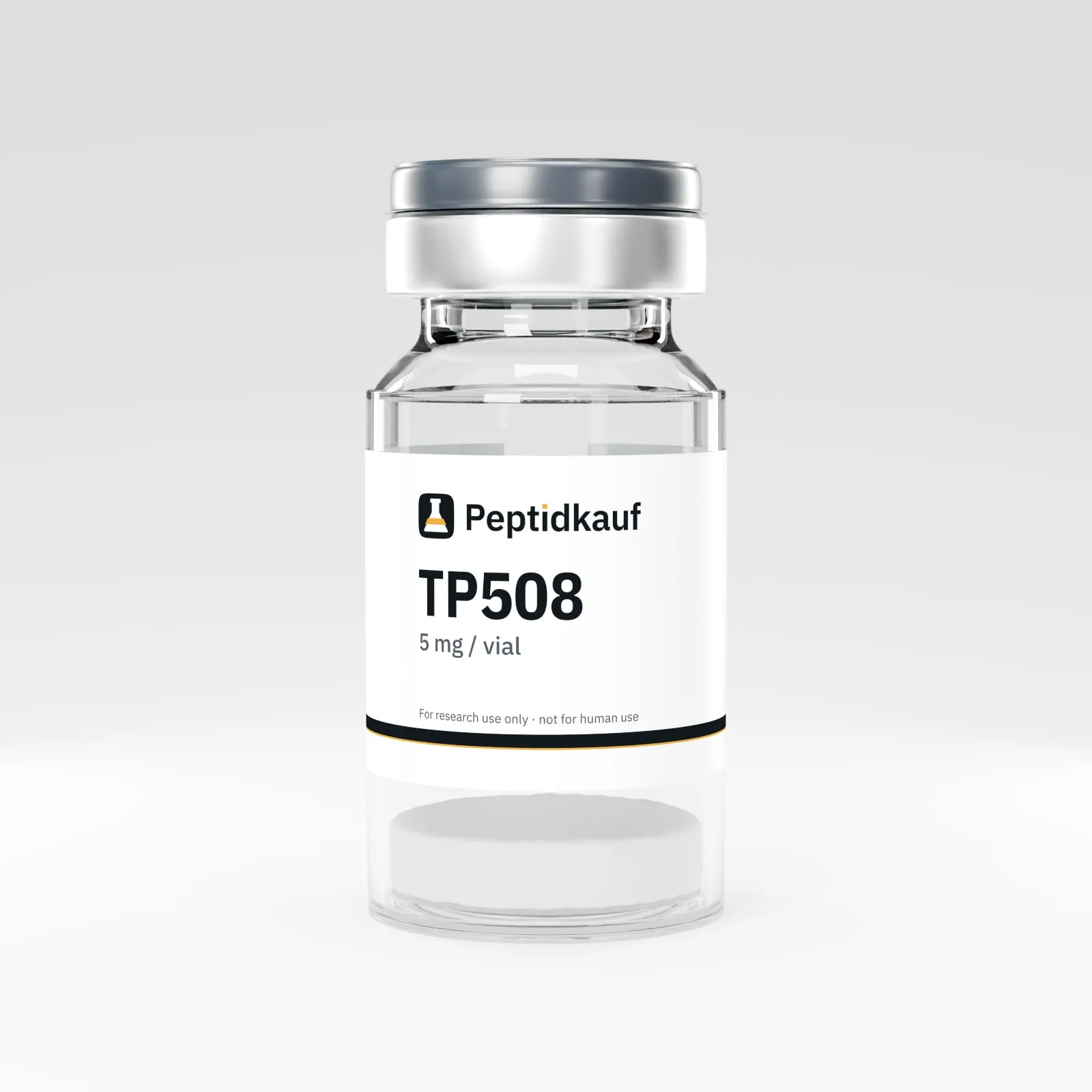
TP508 (Rusalatid)
Synthetic 23-amino-acid peptide from the thrombin receptor-binding region (rusalatide), studied in tissue repair.
| Substance class | Peptide |
|---|---|
| Sequence | AGYKPDEGKRGDACEGDSGGPFV |
| CAS number | 497221-38-2 |
| Molecular formula | C₉₇H₁₄₇N₂₉O₃₅S |
| Molar mass | 2,311.4 g/mol |
| Synonyms | Rusalatid, Chrysalin, Thrombin-Peptid |
| PubChem | CID 16158206 |
Structure
TP508 corresponds to a non-proteolytic section of prothrombin. It does not act through coagulation but via binding sites on cell surfaces.
State of research
Studies examined wound and bone healing, angiogenesis and vascular function in animal models, as well as clinical trials in wounds and fractures.
Status
TP508 is not approved as a medicinal product.
Literature
- Thrombin peptide, TP508, stimulates angiogenic responses in animal models of dermal wound healing, in chick chorioallantoic membranes, and in cultured human aortic and microvascular endothelial cellsGen Pharmacol, 2000 · PMID 11888680 · DOI 10.1016/s0306-3623(01)00118-5
- Thrombin peptide TP508 stimulates cellular events leading to angiogenesis, revascularization, and repair of dermal and musculoskeletal tissuesJ Bone Joint Surg Am, 2006 · PMID 17079379 · DOI 10.2106/JBJS.F.00892
- Technology evaluation: Chrysalin (Orthologic)Curr Opin Mol Ther, 2005 · PMID 15977425
- Could rusalatide acetate be the future drug of choice for diabetic foot ulcers and fracture repair?Expert Opin Pharmacother, 2008 · PMID 18803458 · DOI 10.1517/14656566.9.15.2717
- The Role of Recombinant Proteins and Growth Factors in the Management of Diabetic Foot Ulcers: A Systematic Review of Randomized Controlled TrialsJ Diabetes Res, 2020 · PMID 32733969 · DOI 10.1155/2020/6320514